

Material Matters: Choosing the Right Interior Materials for a High-Performance Office

Updated: Oct 9
In office interior design, materials are not decorative afterthoughts. They directly affect productivity, acoustics, durability, maintenance costs, and even brand perception. Poor material choices will age badly, look cheap within a year, and quietly damage employee comfort. Good material decisions, on the other hand, make an office feel professional, efficient, and built to last.
Below is a practical breakdown of key office spaces, the function of materials, and recommended materials that actually work in real office environments—not just in renders.
1. Workstations & Open Office Areas
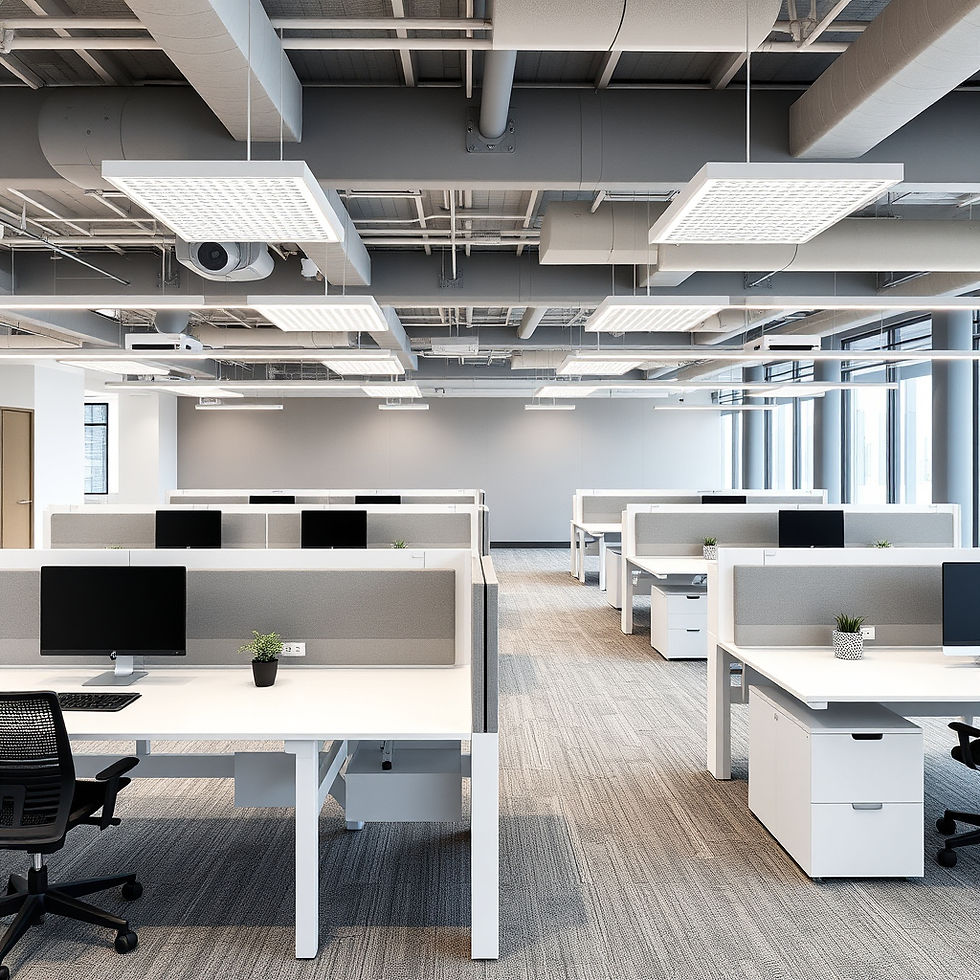
Primary Function: Support daily productivity, reduce noise distractions, and withstand heavy use.
Material Considerations:
Acoustic control is critical. Open offices without sound absorption quickly become chaotic.
Surfaces must be durable, scratch-resistant, and easy to clean.
Visual neutrality helps maintain focus.
Recommended Materials:
HPL (High Pressure Laminate) for desk surfaces—durable, consistent, and cost-efficient.
Fabric-wrapped acoustic panels or PET panels for desk dividers—reduce noise without blocking light.
Powder-coated steel for table legs—strong, stable, and visually clean.
Avoid glossy surfaces here. They look good initially but reflect light and show wear fast.
2. Meeting Rooms

Primary Function: Enable focus, communication clarity, and a professional impression for internal and client meetings.
Material Considerations:
Sound insulation and echo control are non-negotiable.
Materials should elevate the room’s authority without feeling rigid.
Recommended Materials:
Wood veneer or textured laminate wall panels for warmth and professionalism.
Acoustic ceiling panels to prevent echo and voice fatigue.
Carpet tiles to absorb sound and reduce foot noise.
Glass walls are acceptable, but only if paired with acoustic treatment. Otherwise, they’re a visual flex with functional failure.
3. Executive Offices

Primary Function: Represent leadership, decision-making, and brand credibility.
Material Considerations:
Materials should signal authority without excess luxury.
Comfort and acoustics matter more than trends.
Recommended Materials:
Natural wood veneer for desks or feature walls—timeless and refined.
Leather or high-grade fabric upholstery for seating.
Textured wall finishes (not flat paint) to add depth.
This is where cheap materials are most obvious. Cutting costs here damages perception instantly.
4. Reception & Waiting Areas
Primary Function: Create first impressions and reflect brand identity.
Material Considerations:
High foot traffic requires impact-resistant finishes.
Branding should feel integrated, not pasted on.
Recommended Materials:
Stone-look porcelain tiles or vinyl SPC flooring for durability.
Solid surface or laminate reception desks with clean detailing.
Accent walls using brand colors through paint, laminate, or paneling.
If the reception looks generic, clients will assume the service is too.
5. Pantry & Break Areas
Primary Function: Support comfort, hygiene, and informal interaction.
Material Considerations:
Easy maintenance and moisture resistance are critical.
Materials should feel relaxed but still professional.
Recommended Materials:
Quartz or compact laminate countertops are hygienic and durable.
Ceramic tiles or vinyl flooring—slip-resistant and easy to clean.
Matte finishes to hide stains and fingerprints.
Conclusion
Material selection in office design is not about trends—it’s about performance. Every surface should earn its place by supporting productivity, durability, and brand image. Offices that fail at material logic will always feel temporary, no matter how modern they look.
Planning a new office or renovating an existing one? KNS Archipelago helps companies design and build offices with material strategies that balance aesthetics, function, and long-term value. 👉 Consult with our interior design & fit-out team today at WhatsApp.


Comments